
Western imperialists just aren’t imperialising like they used to
Banseka Kayembe
“Get your f*cking a** up and work… it just feels like nobody wants to work anymore” super-influencer Kim Kardashian once infamously shrieked, mid interview in 2022. I don’t often quote a Kardashian, but as the disastrous, idiotic war rages on in the Middle East, it feels apparent that this viral epithet might as well now extend to Western imperialists.
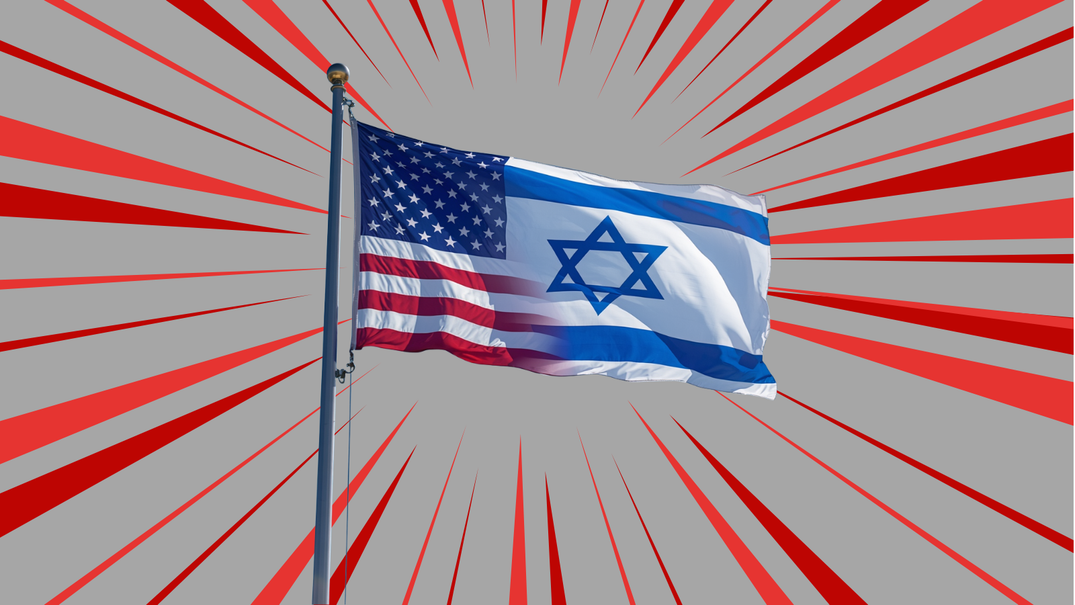
From Trump threatening on Truth Social to end a whole civilisation last week, to Israel flouting a ceasefire deal less than 24 hours later by violently bombing Lebanon over one hundred times in a matter of minutes, it seems the days of a more cautious, strategic, long term imperialisation are gone, in exchange for frantic, desperate, short termist attempts at colonial domination. They seem unable to put in the effort needed for any successful imperial venture to actually work- resulting in terrifying, deadly consequences particularly for civilians in the region.
We want to keep our journalism independent, people powered, with no paywalls and away from big corporate and billionaire funders- but we need your help!
Please consider becoming a subscriber or making a one off donation, for as little as £1
Welcome to the era of lazy imperialism, where The US - the biggest empire in the world - and its rogue state ally Israel have lost all sight of how to actually maintain and extend their colonial reach. What does this imperial transition say about the future of the US empire?
Donald Trump has previously claimed that he is a master negotiator, unlike in his view other presidents. His infamous 1987 book “The Art of The Deal” provides a range of advice about how to get the deal you want. "I aim very high, and then I just keep pushing and pushing to get what I'm after. Sometimes I settle for less than I sought, but in most cases I still end up with what I want." Brute force is a key feature of Trump’s second term, with little to no finesse deployed in order to capture new territory. The swift takeover of Venezuela earlier this year- resulting in the kidnapping of its President Nicholas Maduro - felt like it happened in the blink of an eye.
In diplomacy, Trump’s geopolitical strategic eye seems focused on military capacity alone. Last year when speaking to Zelenskyy about accepting a ceasefire deal, he bluntly told the Ukrainian President in front of the world’s media “you don’t have the cards right now. With us you start having cards…I've empowered you to be a tough guy but I don’t think you’d be a tough guy without The United States”. This messy argument suggests a world view in which power shows itself primarily through military might.
Trump is not wrong to assert that military capability matters of course. There are instances in US imperial history where a straight forward “might is right” approach did work. In 1853, American Commodore Matthew Perry led his four steam powered warships into the harbor at Tokyo Bay, Japan, seeking to re-establish for the first time in over 200 years regular trade between Japan and the US. In the 1800s Japan was in a unique situation having isolated itself almost completely from the rest of the world in an effort to maintain traditional Japanese culture and ways of life.
As a result it was technologically completely outmatched and low hanging fruit for the US. The US strategy was “gunboat diplomacy”, forcing the Japanese to open up to western trade through a willingness to use its advanced firepower; they fired off cannons close to the city of Edo. Japan begrudgingly accepted the deal, paving the way for future trading with the US and giving the US the right to appoint consuls to live in Japanese port cities, something not previously granted to foreign nations.
Needless to say, Iran is not in the same position as 19th century Japan. The country is not technologically or strategically naive having invested heavily in asymmetric warfare: missile programmes, chemical weapons, cyber capabilities, and a network of regional allies and proxy forces stretching across Iraq, Lebanon, Yemen and Syria. They’ve been preparing for decades for a more outwardly hostile US operation, being prepared to leverage the Strait of Hormuz, a narrow checkpoint through which roughly a fifth of the world’s oil supply passes. Iran has positioned itself so that any direct confrontation would carry swift global economic consequences, giving it a powerful defence against larger militaries.
Israel’s attempts to build consent for their war, by insisting Iran is a nuclear threat and an imminent terrorist threat to their nation, shows a weakened understanding of imperialising beyond Gaza and The West Bank. They’ve had a carte blanche allowance to do whatever they wanted militarily in Gaza, indulging in war crimes such as dropping white phosphorus on civilians, targeting schools and hospitals, and they have killed an estimated 75,000 Palestinians since October 7. A systematic, long term occupation -including the control of their borders - in Gaza for decades beforehand laid the groundwork for such shocking, brutal violence. The same tactics cannot work in Iran, a country which has not been occupied by Israel in any material sense, has been able to shore up military defences, and has access to valuable resources. It would require much more than brute force to defeat Iran.
Political commentator and Assistant Professor at KCL Dalia Gabriel correctly asserted whilst speaking on Novara Media that “military violence is just one form of domination…you cannot dominate through military violence alone. You have to enmesh yourself socially, politically, bureaucratically". Successful long term imperialism is rarely forged through just one decisive deal as Trump simplistically seems to think, but is a succession of carefully deployed strategies of influence, economic and political dependence, and control.
The British Empire - one of the most successful empires in recent history - relied on far subtler mechanisms than just weaponry. English was embedded as a main language in states like India, Pakistan, Nigeria, Ghana, Kenya, Ireland and Jamaica. Local elites were co-opted and often financially rewarded by the imperial systems, which then weakened those states and made them easy to control and exploit. In Nigeria, the British ruled through local chiefs and emirs, integrating them into the colonial state. New bureaucratic systems were also created or remade in Britain’s image. The introduction of the Indian Penal Code for example reshaped social norms in India and Pakistan.
Corporate power played a central role too. In many ways British colonialism is a collusion between private enterprise and state power. Dr. Kojo Koram, an academic and author argues in his book “Uncommon Wealth: Britain and the Aftermath of Empire” that the British state used private companies like the East India Company to act as "conveyor belts" for colonial extraction, separating the state from direct accountability. The East India Company did not begin as a conquering army but as a commercial enterprise, gradually transforming trade relationships into political authority. Similarly, some of the first slave trading ships sent to West Africa from England were private ships signed off by royal charter, by James I. The result of this sprawling, lateral strategy has had a lasting legacy well beyond the formal end of the British Empire.
When it comes to today’s biggest imperialists, it seems like they just don’t want to work anymore. A combination perhaps of hubris, being high off their own supply, internal political pressures (Netenyahu has a political self interest in being permanently at war), some unhelpful psychological traits like narcissism, and a preference for immediacy and spectacle have meant that we are in an era of lazy, and frankly downright stupid imperialism. It’s a strategy with devastating consequences for civilians in the region, economic consequences that could impact world markets and feels akin to an empire that is on its last legs. Brute military action alone suggests the US doesn’t have perhaps the patience, but maybe not even the ability to more subtly reshape the world anymore.
The American Empire is not about to disappear tomorrow, but it does perhaps signal a transition into a more fragmented coercive form of world governance, that is likely to be less and less successful. A lazy approach to imperialism suggests the only way is down for this empire.
Thanks for reading our article! We know there's power in people and really appreciate everyone who reads our work.
Give us a follow on Instagram and TikTok to see more of our independent journalism.