
“How can a better vision of identity be constructed in the wake of the material reality that our safety and security is bound up with one another’s ability to also be safe?”
Banseka Kayembe
“I can’t breathe”. No matter how many times you hear it, it’s impossible to ever get used to it, to normalise those words being a person’s last breath whilst in the hands of police custody. Those words were uttered by George Floyd a black American man who had a police officer’s knee on his neck until he suffocated to death in 2020. They were also said by 18-year-old British boy Henry Nowak in 2025, whose pleas for help were cruelly dismissed by police officers, leading to his death from a fatal stab wound. These two heartbreaking incidents - whilst having their own specificities- both have in common police mistreatment leading to the worst outcome: death.
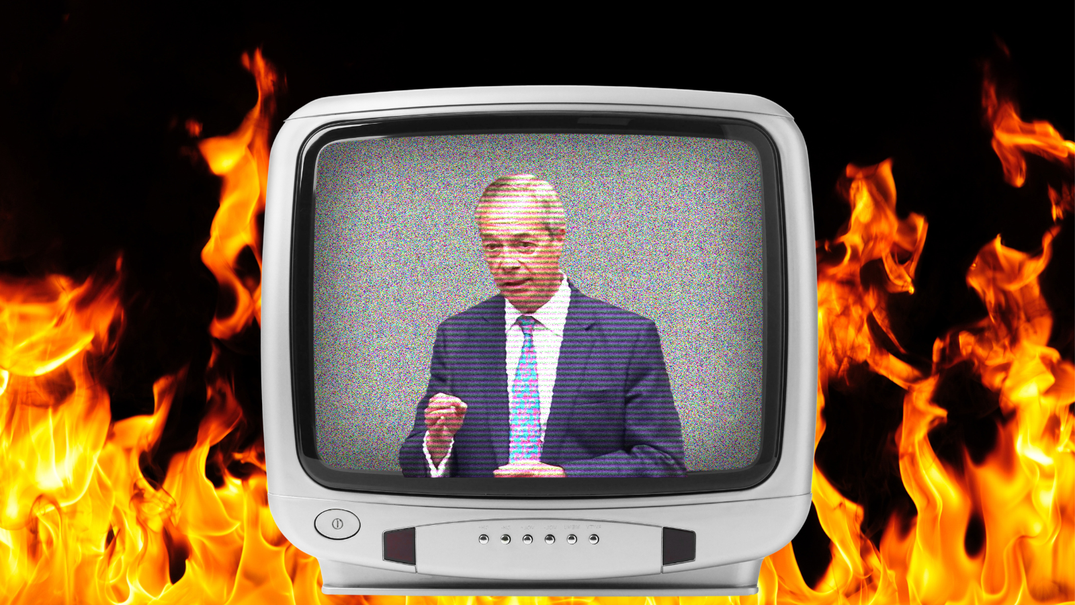
The political right- perhaps more than ever in my lifetime- is not invested in what brings us together, our commonalities. Hot on the heels of a potentially make or break by-election in Makerfield and impending questions about his finances, Reform UK leader Nigel Farage made a premeditated statement last Thursday morning, announcing that fears of racial bias accusations and anti-white institutional racism was the root cause of Nowak’s death by 23 year old Sikh man Vikrum Digwa, who falsely framed Nowak as a racist to cover up his own murder. Reform chairman Zia Yusuf declared on X that “White people are now demonstrably the biggest victims of racism in Britain”. “Cold hard rage” was what Farage called for and indeed hours later, 100 or so people in Southampton engaged in violent clashes with police, including hurtling bins at officers, with car windows smashed and bricks seen scattered across the roads.
We want to keep our journalism independent, people powered, with no paywalls and away from big corporate and billionaire funders- but we need your help!
Please consider becoming a subscriber or making a one off donation, for as little as £1
The wishes of Nowak’s family were explicitly not to make this case about race or religion- barely 24 hours went by before that plea from a grieving family was ignored by radical right agitators both here and the US. I think it’s important to call this what it is: a form of whipped up white grievance which relies on outright falsehoods to push increasingly extreme narratives, and create an enormous amount of distraction from the issues that are really plaguing us; rent and mortgage prices, fuel prices, a shrinking labour market, drab soulless highstreets, a draconian welfare state and impoverished state support.
Firstly it is important to say that there is no such thing as “two tier policing” where right wing groups and white people are systematically given a harder time in our criminal justice system, than people of colour and those supporting left wing coded causes like Palestine. Black people are seven times more likely to die after contact with the police compared to white people. The horrific case of Child Q, a 15 year old black girl strip searched by police whilst on her period reflects a borne out statistic that black children are up to eight times more likely to be strip searched. Black people are over three times more likely to have police force used against them and four times more likely to be stopped and searched than white people. Currently in the UK if you hold up a sign that says “I Support Palestine Action” you could be arrested, and indeed hundreds now have been. The grooming gangs scandal which often crudely gets brought up as a prime example of policing favouring ethnic minorities ignores that gender and class were highly likely to be factors in the victims not being believed. Far right agitators rarely acknowledge this as it muddies the waters on their race-only explanation. Ultimately, the concept of two tier justice is nothing more than a dangerous political fugazi.
You perhaps could argue in this individual case that Nowak was stereotyped as a “white working class lad” and therefore deemed racist as academic Lisa Mckenzie tried to. However, I think a more likely outcome was that Digwa and his family members framed Nowak, the police accepted that framing too quickly and did not treat Nowak- who they’d been lead to believe was a perpetrator of racial harassment - with the care and due diligence that anybody deserved whether he was innocent of those accusations or not. Very few commentators have reiterated that our safety and fair treatment from the police should not be determined by whether the police at that moment think you are guilty.
But how can we infer structural anti-white bias from a singular incident, yet ignore the well-worn statistics about how other groups are mistreated by the police? How does this prove anti-white bias when there are no other synonymous cases of that type, yet countless cases of many others not necessarily white being killed by police mistreatment? Why choose to see a pattern inferring anti-whiteness rather than seeing Nowak’s death as part of a wider spate of police deaths that impact many from different communities, or a state failure to invest in preventative measures that save young people? That in my view is a political, strategic choice with dangerous consequences, not a logical or fair one.
Antiracist campaigners have long been warning that poor policing standards for some groups of people has a ripple effect on how others are treated by our criminal justice system. Henry Nowak’s case has much in common with Kevin Clarke a black schizophrenic man who died in 2018 after telling police officers “I can’t breathe” whilst being violently restrained. Neither of these men received the treatment and dignity they deserved, but only one of these deaths is useful for the ugly grievance politics that Farage and others need to build their political hegemony. Otherwise, when it comes to bad policing it’s crickets from them.
Bad faith commentators spent time wailing about the political reaction to George Floyd’s murder in 2020, citing Keir Starmer and Angela Raynor “taking the knee”. One of the most jarring aspects of this comparison is that many of the outputs of wider discourse about antiblack racism in this country were superficial if not outright pointless. Taking the knee, well that’s symbolic. I’m not against gestures of solidarity but that alone does little. Starmer taking the knee when it was politically palatable to do so, didn’t stop him condemning the statue of slave trader Edward Colson being pulled down in Bristol, or calling ideas to defund the police and divert some funding towards crime prevention instead “nonsense”. Sure, there was a sprinkling of more black people in corporate adverts (much to the distaste of Reform MP Sarah Poachin) but how did that create redistributive, transformative change for black communities? This focus garnered by Floyd’s murder was just some vague currency in the culture attention economy for a short period of time. It changed almost nothing.
DEI (Diversity, Equity and Inclusion) has held a particular focus in this inflamed debate, further evidence of how much these tensions are partly an American import - an off the shelf US playbook getting reenacted here in Britain. Accusations that DEI policies have led to police favouring ethnic minorities simply isn’t reflected in the data; the police mistreatment disparities outlined above means the DEI fearmongering just doesn’t hold water. Like many people who work in corporate-like jobs will know, just because something is written down in a policy paper, that doesn’t mean it’s actually reflective of the lived culture of that organisation.
I have also been disappointed at moments with some people’s lack of clarity on these issues, including commentators that I assumed knew better. There is a left-wing critique of liberal diversity initiatives that I agree with: middle class fixations on representation over substantive change, antiracism as branding, an obsession with symbolic acts, being overly focused on interpersonal behaviors rather than the structural issues that make racism so pervasive. More concrete calls to tackle racism like investing in crime prevention measures, increasing more social workers or youth workers, got replaced with hollow corporate spiel.
This critique however, needs to be made lucidly and clearly, so that it doesn’t suggest all endeavors to challenge racism are a problem or are somehow to the detriment of white people. Leaning into right wing/borderline conspiratorial theories about “DEI gone too far”, or suggesting the words equity and equality being written on a policy paper somehow translated into the unbearable death of this young man, is a mistake that only cedes ground to ever more draconian, conspiratorial theories on the right, rather than facilitating a more sophisticated conversation about where EDI leaves much to be desired.
What’s strange about this uno-reverso of roles where white people are being encouraged to believe their race puts them at a structural disadvantage, is that I fear we know how this plays out. Whether it’s whipping up white grievances in 2026, or watering down and diluting antiracist solutions into meaningless symbolism, the powers at be don’t really care about making the lives of working people, be they black, white or brown any better. They’ll do whatever it takes to prevent us coming together and demanding better rights, protections and more resources for everyone, whether that’s through capturing more radical ideas around inequality and defanging them, or weaponising incidents of violence to incite and generate grievance within white British communities. In both instances, we are being used as fodder for the uber wealthy, a situation that the ordinary everyday person has little to gain from, whatever their colour.
I found myself returning, as I often do, to fictional writers during this period - storytellers often have something more useful to tell us than political commentators I’ve decided. Black American writer Toni Morrison spoke about the need for white people to “understand that he or she is also a race, that’s also constructed, that’s also made and also has some kind of serviceability”. The modern concept of race itself comes from a desire to divide and rule; pitting the working class against one another to prevent an uprising against the wealthiest. Racism and white supremacy doesn’t just harm its primary targets (although I am very proud and stubborn, so I hate thinking of myself as a victim). It deeply harms white people.
The encouragement by nefarious people in politics to try and get white people’s buy-in on racism is harmful to those people. White people shaping themselves around these exclusionary forms of identity is self-corrosive and as Morrison pointed out a huge waste of time. This is a belief often at odds with more liberal (and in my opinion unhelpful) ideas about racism which casts people of colour as being the only victims and white people having so-called “privilege”. The reality is white supremacy creates a kind of identity for white people which is fundamentally illiberal for them.
The existential question, beyond more wealth distribution to alleviate some of the root causes of these tensions, is this: how can a better vision of identity be constructed in the wake of the material reality that all our safety and security is bound up with one another’s ability to also be safe? What is the spiritual, emotional alternative to this manufactured white grievance? I’m not sure talking a bit about wealth taxes and jangling them in front of voters like a shiny pair of keys is enough. We must engage in some utopian thinking that transforms who we see ourselves as, as well.
It is difficult to say that where we go next will be anything other than a bigger dumpster fire of disinformation. Political opponents to the direction we are heading must continue to fact check and push back on dangerous myths, to build a better economic vision. Do we allow Farage et al to push the nation’s identity into evermore rotten ethno-nationalist territories? Or can we reconstruct alternative forms of identity rooted in solidarity, care and shared interests? What is the better, more truthful story that can replace white grievance? Our democracy may depend on finding a compelling answer.
Give us a follow on Instagram TikTok and YouTube to see more of our independent journalism.