
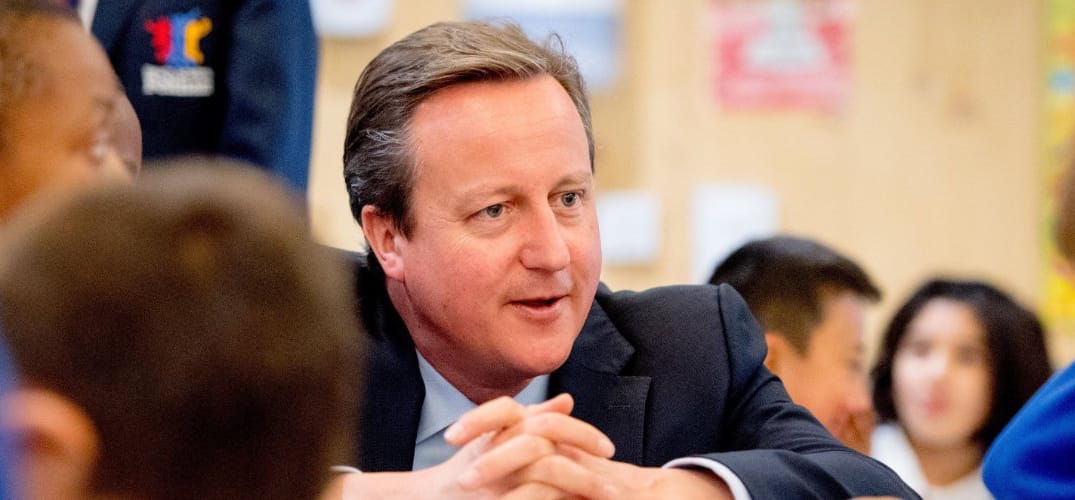
How did David Cameron and his Chancellor George Osborne take a sledgehammer to the intergenerational contract?
Banseka Kayembe
“What happened to that tw*t David Cameron?” asked actor/east-end treasure Danny Dyer in 2018 shortly after the Brexit referendum. As a millennial who became an adult just as Cameron’s government came into power, I think about those David Cameron years frankly more than I’d like to. He’s largely shied away from the limelight since leaving office, apart from a quick stint as an (unelected!!) minister in the dying days of the last Conservative government. Last week however, he popped up on my timeline.
“With your help we changed our party to serve as a modern, compassionate Conservative party that truly represented our country,” he boasted reflecting on the 20th anniversary of his election as Tory leader with the kind of hazy nostalgia probably only possible if your wife’s father is a Baronet. Unfortunately for Cameron, there’s a fly in the ointment. For young people, his subsequent election as Prime Minister in 2010 marked the beginning of the end of any meaningful future for our generation.
We want to keep our journalism independent, people powered, with no paywalls and away from big corporate and billionaire funders- but we need your help!
Please consider becoming a subscriber or making a one off donation, for as little as 99p
Despite his remarkable ability to pretend otherwise, the project of “Cameronism” has become a kind of political tomb for anyone under 40: burying opportunity, piling debt onto young people, and redistributing wealth upwards and well out of their reach. And more than a decade later, despite some tweaks today’s leaders have taken no serious steps to reversing the foundations of that legacy.
So how did David Cameron and his Chancellor George Osborne take a sledgehammer to the intergenerational contract?
“The Heir to Blair”
In the noughties, the Conservative party was not doing well. The UK was gripped by Blairism, a politics that had repackaged Thatcherism for the 2000s. Labour expanded public services but often outsourced them to the private sector; it raised school and university participation, but paved the way for tuition fees; they reduced child poverty, but fuelled the housing bubble (spoiler: it burst). Blairism styled itself as forward-looking, global, and socially liberal: Britpop, Cool Britannia, diversity, gay rights, multiculturalism. The culture in some ways became modern, even if the material conditions beneath it didn’t.
Cameron self described as “the heir to Blair” a nod to his ambitions to “modernise” what seemed to be a creaking old Conservative party that hadn’t kept up with the modern world. Cameron's rival for the leadership David Davis chose to campaign with female supporters sporting T-shirts with "It's DD For Me" written across the chest at the party's annual conference (yes that really happened). Cameron’s initial big pitch as Conservative leader is not so much on economics, but on building in his words “a stronger, more cohesive society”.
Then the thing that politicians didn’t think would happen, happened. In 2008 there’s a global banking crisis caused by poor, short term banking practices and bad regulation. Saving the banking industry costs the UK taxpayer billions.
Austerity for the poor, socialism for the rich
Certain phrases stick in my mind from the beginning of Cameron and Osborne’s time in power. “We’re all in it together” was meant to inspire camaraderie, solidarity through suffering. But who exactly was “we”?
Cameron’s coalition government (with the eager help of the Liberal Democrats) created one of the biggest shifts of wealth this country has ever seen- in the wrong direction. For young people youth centres disappeared, mental health support collapsed, and tuition fees tripled whilst maintenance grants were binned, leading to student riots including the Conservative Headquarters being broken into. They scrapped the Educational Maintenance Allowance (EMA), which helped teenagers from low-income families stay in education. Jobseeker’s allowance was tightened and sanctions ramped up.
In 2013 I spent a year interning at an East London legal aid firm; I was often distressed and upset at how many people with housing or family issues the firm was having to turn away because the funding simply wasn’t there anymore. In the absence of the state, food bank usage ballooned, unstable gig economy work (often disproportionately done by younger people) skyrocketed. The justification for this brutal austerity was that Britain’s credit card had been “maxxed out!” The taxpayer needs to run government funds like a household apparently, and if you had no money in the bank you needed to cut back.
Aside from the fact the household comparison never made any sense (a nation severely slashing its spending significantly impacts its ability to secure the income it needs through taxes) not everybody had to live within their means. Corporation tax fell, Capital gains tax was cut. Quantitative easing was rolled out- a long winded way of saying the government gave huge amounts of money to the wealthy in the hope they would invest in jobs- in reality they largely invested in assets like property or shares, not the real economy. The rich’s state sponsored wealth skyrocketed.
Homes for profit, not for people
Cameron’s answer to an already screwed housing situation was not great. He promised one million new homes over a five-year period, built largely by the private sector. Social housing was increasingly a pipe dream; from 2011-2016 councils in the UK had built only 2,000-3,000 homes a year. Housing benefit for 18-21 year olds was abolished (eventually this decision was revoked in 2018 because it was so insane). Despite flooding the private market with cash, Cameron built the fewest homes of any British Prime Minister since the 1920s.
Osborne’s “Help To Buy” scheme, which involved the government giving interest-free loans for the purchase of new-build properties “was only really a gimmick that worked for the first group of buyers. They needed prices to rise from that moment on, pricing out more people in the queue for new homes” said housing analyst Rose Grayston in 2023. It's also thought to be a key driver in creating the demand for shoddy new build flats that have lost value. And all that quantitative easing for the rich? Much of it was stashed away in property, causing the prices of housing for everyone to go up. Great news if you’re a landlord, not so much if you’re a young renter, or aspiring home owner.
Wealth pays, not work
For decades, Britain told its young people a familiar lie: work hard, get qualifications, keep your head down, and eventually you’ll earn stability. I don’t want to lay the entire blame at one government’s feet, this is after all the logical outcome of political decision making since the 1980s. But in my opinion the lasting legacy of Cameronism is that it marks when work stopped being the route to stability. Profit comes from rent extraction, property speculation, and financial engineering. Wages stagnated to the point where young people could work full-time and still be unable to pay rent, while big business and wealthy individuals earned unjustifiable levels of passive income, subsidised by the state at our expense. Young people, as well as many other working people’s labour just seem to be funding some rich person’s assets.
The message for young people seems to be, why bother putting any effort or money into your creative passion, or in something innovative when you can just become a landlord?
The “Enshittification” of the online world, whilst the real one crumbled
Whilst Cameron could have not predicted some of this, it is staggering how much digital capitalism has replaced the massive absence of public spaces available in young people’s lives.
As the state withdrew from public life, tech corporations moved in. The early iterations of the internet that offered connection and creativity has been replaced by platforms optimised for extraction: attention, data, advertising profit. The spaces where young people fled to escape austerity (compounded hugely by the pandemic) became new markets to exploit them. Social communities have turned into networking and surveillance, friendships into algorithmic content, and creativity into brand-building.
“What happened to that tw*t David Cameron?” I’ve no idea if his conscience ever itches at the destruction his government wrought. But, younger people’s aspirations for something bigger than a future being sold off, I hope means something positive about where we go from here.
Thanks for reading our article! We know there's power in people and really appreciate everyone who reads our work.
Give us a follow on Instagram and TikTok to see more of our independent journalism.